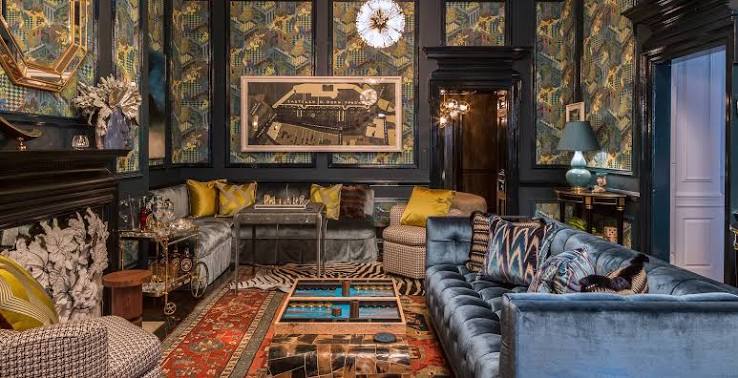
For nearly two decades, the design world was held captive by the pristine, quiet hands of minimalism. White walls, hidden storage, Scandinavian functionality, and a strict “less is more” philosophy dominated social media feeds and staging galleries. Homes were sleek, clean, and undeniably tidy—but they also began to feel somewhat clinical.
A profound cultural shift has taken hold. Driven by a collective craving for warmth, individuality, and spaces that feel deeply human, the design pendulum has swung drastically to the other side. Enter Modern Maximalism paired with the unstoppable resurgence of Vintage Decor.
This movement is not an invitation to clutter; rather, it is a celebration of curated abundance. Modern maximalism focuses on “intentional storytelling,” merging the fearless use of color and pattern with the history, soul, and character of vintage artifacts. It is an design rebellion that proudly declares: more is more, but only if it means something.
Defining Modern Maximalism: The Art of “Intentional Chaos”
To understand why this style has captivated modern homeowners, it is essential to separate contemporary maximalism from the hoarding tendencies or chaotic clutter of the past. Today’s maximalism is mindful, artistic, and deeply strategic.
Classic Maximalism  [Excess / Sensory Overload / Visual Noise]
       VS.
Modern Maximalism   [Curated Abundance / Harmonious Contrast / Storytelling]
Modern maximalism values the interplay of texture, light, and history. Instead of filling every square inch of a room with random objects, designers construct layers. The goal is to build an emotionally engaging environment where each piece—whether a contemporary modular sofa or an Art Deco cabinet—holds its own ground while contributing to a larger visual narrative.
The Psychological Shift Behind the Trend
Why are we suddenly rejecting the clinical, white-box aesthetic? The answer lies in our evolving relationship with our homes. Following years of global uncertainty and hyper-digitization, our living spaces are no longer just places where we sleep; they are our sanctuaries.
People are utilizing “dopamine decor”—the practice of styling a home strictly with things that trigger joy, comfort, and nostalgic warmth. A minimalist room tells a story of restraint, but a modern maximalist room tells the story of you: where you’ve traveled, what eras you love, and the specific textures that make you feel secure.
Why Vintage Decor is the Soul of the Movement
You cannot have modern maximalism without vintage decor. While contemporary furniture provides clean lines, architectural weight, and structural comfort, vintage pieces provide the one thing big-box retail stores cannot manufacture: soul.
The partnership between modern maximalism and vintage decor flourishes because second-hand treasures break up the predictability of modern manufacturing. Stacking a room with entirely brand-new items often leaves it feeling like a furniture showroom. Introducing a patinated leather armchair from the 1970s, a mid-century teak sideboard, or a gilded Victorian mirror instantly anchors the room in history.
+------------------+     +-------------------+     +--------------------+
|  Modern Base     |  +  |  Vintage Elements |  =  | Curated Maximalism |
|  (Clean/Bold)    |     |  (Soul/Character) |     | (Rich Storytelling)|
+------------------+     +-------------------+     +--------------------+
The Eco-Conscious Appeal
Beyond aesthetics, the rise of vintage decor is deeply tied to sustainability. As consumers become increasingly aware of the environmental toll of “fast furniture”—which is frequently made from cheap composite materials destined for landfills—investing in vintage pieces has become a badge of honor. Choosing a well-made, solid wood vintage chest of drawers over a flat-pack alternative rejects disposable culture while celebrating historic craftsmanship.
Key Pillars of the Modern Maximalist & Vintage Aesthetic
Achieving this look requires an understanding of how to balance variety with cohesion. If you are looking to bring this vibrant style into a space, focus on these fundamental pillars:
1. The Power Palette: Rich Saturated Hues & “Color Drenching”
Say goodbye to sterile grey and beige. Modern maximalism relies on a deeply saturated, mature color palette. Designers are gravitating toward rich, light-absorbing tones such as:
-
Chocolate Brown & Tobacco Leather: Serving as the new grounding neutrals.
-
Deep Crimson & Burgundy: Adding dramatic elegance to dining spaces and lounges.
-
Transformative Teal & Forest Green: Evoking nature while maintaining a moody, cinematic atmosphere.
A major trend within this movement is color drenching (or color capping), where walls, baseboards, trim, and sometimes even the ceiling are painted in the same rich tone or a close gradient. This creates a cohesive, enveloping canvas that allows vintage frames and colorful upholstery to pop without making the room look fragmented.
2. Fearless Pattern Mixing
Maximalism encourages you to throw out traditional rules regarding prints. The secret to mixing patterns successfully lies in varying the scale and texture rather than trying to make everything match.
The Golden Rule of Pattern Mixing: Pair a large-scale, sweeping botanical wallpaper with a geometric chevron textile or a classic, tight gingham print. By keeping a loose threads of common color running through the pieces, the combination feels harmonious rather than chaotic.
3. Tactile Multi-Layering (Texture-Maxxing)
A room must engage the sense of touch just as much as the eyes. Modern maximalism layers materials to create a luxurious sensory experience.
-
Pair a sleek, cold material like a veined marble coffee table or a chrome lighting fixture with ultra-plush, warm textiles like bouclé, chunky corduroy, or heavy velvet.
-
Incorporate textile wall art, such as vintage tapestries or inherited quilts, to soften the hard architectural lines of modern buildings.
4. Sculptural & “Chunky” Silhouettes
Furniture shapes have softened. Sharp, thin, fragile silhouettes are stepping aside for monolithic, low-slung, and curved forms. Think ’70s-inspired serpentine sofas, scalloped-skirt armchairs, and thick-legged timber dining tables. These substantial pieces give a room architectural weight and a sense of permanent comfort.
A Room-by-Room Guide to Styling the Trend
To integrate modern maximalism and vintage decor into a website portfolio or a personal home layout, look at how the aesthetic translates across different spaces:
| Room | Anchor Modern Piece | Vintage Element | Maximalist Accent |
| Living Room | Low-slung, curved modular sectional in rust velvet | A mid-century brutalist coffee table or a large Persian rug | A floor-to-ceiling gallery wall with mismatched frames |
| Dining Room | Minimalist architectural dining table in smoked oak | A set of mismatched post-modern dining chairs | An oversized Murano-glass or crystal chandelier |
| Bedroom | A clean, monolithic upholstered headboard | An antique French armoire or Chinoiserie nightstands | Rich botanical wallpaper and heavy, pooled velvet drapes |
| Powder Room | Sleek modern plumbing fixtures and vanity | An ornate, gilded Victorian mirror frame | High-drama, illustrative wallpaper tracking wildlife or florals |
How to Curate the Look Without Creating Clutter
The biggest mistake amateur decorators make when attempting maximalism is adding too many small trinkets, which results in visual noise. To keep your space looking sophisticated, elegant, and elevated, follow these professional design strategies:
Choose “Hero” Pieces
Every room needs a focal point. Select one or two items to be the undisputed stars of the space—such as an extraordinary vintage velvet sofa or a massive piece of contemporary abstract art. Allow other decor choices to act as supporting characters to avoid competing for attention.
Utilize the “Collage Room” Strategy
Move away from matching furniture sets. A true maximalist space looks like it was collected over a lifetime, not purchased during a single weekend trip to a showroom. Mix eras freely: pair a streamlined, contemporary matte-black media console with a whimsical, hand-carved antique chair sitting beside it.
Give the Eye Breathing Room
Even the most daring maximalist interiors need brief moments of rest. You can achieve this balance by incorporating negative space around large windows, using soft, warm ambient lighting rather than harsh overhead bulbs, or adding large mirrors to bounce light around and break up heavy patterns.
Conclusion: A Design Philosophy with No Expiration Date
The rise of modern maximalism and vintage decor is far more than a passing internet trend or a reaction to a clean aesthetic. It represents a fundamental return to personal identity in interior design. It grants permission to stop decorating for the approval of a minimalist grid and to start decorating for our own daily joy.
By blending the structural intelligence and bold palettes of modern design with the sustainable, narrative-rich essence of vintage treasures, this style creates homes that feel genuinely alive. It reminds us that our living spaces should be a rich, beautifully layered reflection of our lives—unapologetically bold, deeply comforting, and entirely unique.
