Power outages used to be a minor, infrequent inconvenience—a good excuse to light some candles and find a board game. Today, our homes are nerve centers of connectivity, remote work, climate control, and essential medical equipment. When the grid goes down due to severe weather, cyber threats, or aging infrastructure, the consequences can range from spoiled food and freezing rooms to lost income and compromised safety.
A home generator system is no longer just a luxury for the ultra-prepared; it is a critical investment in your household’s resilience. This comprehensive guide will walk you through everything you need to know about choosing, installing, and maintaining the perfect backup power system for your home.
1. Understanding Your Options: Portable vs. Standby Generators
When diving into the world of backup power, the first major decision you will face is choosing between a portable generator and a permanent standby generator. Both serve the same ultimate purpose, but they operate, perform, and cost very differently.
Portable Generators
Portable generators are mobile units, typically powered by gasoline, diesel, or liquid propane. They require manual setup when the power goes out.
-
How they work: You wheel the unit out of storage (it must never be run indoors or in an enclosed space due to carbon monoxide risks), start the engine, and run heavy-duty extension cords from the generator to your individual appliances. Alternatively, you can have an electrician install a manual transfer switch to power select circuits in your breaker box.
-
Pros: Lower upfront cost; flexibility to take the unit camping or to job sites; easy to replace.
-
Cons: Limited power capacity; requires manual operation in bad weather; requires storing and handling highly flammable fuel; cannot run automatically if you are away from home.
Whole-House Standby Generators
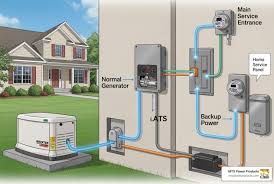
A standby generator is a permanent fixture installed outside your home, much like a central air conditioning unit. It is hooked up directly to your home’s electrical panel and runs on your existing natural gas or liquid propane supply.
-
How they work: The system constantly monitors the incoming utility power. The moment it detects a drop in voltage, an Automatic Transfer Switch (ATS) disconnects your home from the grid and turns on the generator. This entire process happens seamlessly in about 10 to 20 seconds.
-
Pros: Hands-free, automatic operation; can power the entire house (including central A/C and well pumps); runs indefinitely on natural gas; adds long-term equity to your property.
-
Cons: Significant upfront purchase and professional installation costs; requires permanent outdoor space.
2. Sizing Your System: How Much Power Do You Need?
Generator capacity is measured in kilowatts (kW). Choosing the right size isn’t about the physical square footage of your house; it’s about the electrical load of the appliances you need to run simultaneously.
To accurately size a generator, you must understand the difference between running (watts) and starting (surplus) watts:
-
Running Watts: The continuous power an appliance needs to keep operating.
-
Starting Watts: The brief surge of extra power required by motorized appliances (like refrigerators, air conditioners, and sump pumps) just to kick-turn the motor on.
The Calculation Process
-
Identify Essentials: List the must-have appliances during an outage (e.g., refrigerator, internet router, select lights, heating system, sump pump).
-
Locate Wattage Ratings: Check the manufacturer tags on these appliances to find their running and starting watts.
-
Add and Budget: Add the total running watts together, then add the highest single starting wattage to that total.
Here is a quick reference table for common residential power requirements:
| Tier | System Capacity | What It Can Power | Best For |
| Small Portable | 3 kW – 5 kW | Fridge, lights, Wi-Fi router, phone chargers, TV. | Essential survival items only. |
| Large Portable / Entry Standby | 7 kW – 12 kW | Fridge, well pump, furnace blower, microwave, select lights. | Managing comfort with minor lifestyle adjustments. |
| Mid-Size Standby | 14 kW – 22 kW | Everything above + central A/C, electric water heater, washer/dryer. | Full-scale home comfort without power rationing. |
| Large Standby | 24 kW – 48 kW+ | Large estate homes, multiple A/C units, pools, smart home automation. | Complete grid independence. |
Pro-Tip: Overestimating your wattage needs slightly is always safer than underestimating. Running a generator at 100% capacity continuously will drastically shorten its lifespan and can cause dangerous voltage drops.
3. Fuel Sources: Pros and Cons
The lifeblood of your generator is its fuel. Your choice will dictate how long you can ride out a prolonged blackout and what kind of ongoing maintenance you will face.
Natural Gas (NG)
-
Availability: Delivered directly via underground utility lines.
-
Best for: Standby generators.
-
Verdict: The gold standard for convenience. Because it is tied to the utility line, you never have to worry about refueling. As long as the gas lines remain active (which they usually do during severe storms), your generator will run indefinitely.
Liquid Propane (LP)
-
Availability: Stored in large propane tanks on your property.
-
Best for: Standby or dual-fuel portable generators in rural areas without natural gas lines.
-
Verdict: Clean-burning and highly efficient. Propane has an indefinite shelf life, unlike gasoline. The only limitation is the physical size of your storage tank.
Gasoline
-
Availability: Purchased at local gas stations.
-
Best for: Standard portable generators.
-
Verdict: Highly accessible but difficult to manage long-term. Gasoline degrades in as little as 30 days unless treated with fuel stabilizers. Furthermore, during widespread grid failures, local gas stations may lack the power to pump fuel, rendering your generator useless once your garage reserves dry up.
4. The Critical Component: The Transfer Switch
You cannot safely hook up a powerful generator directly to your home’s outlets. To bridge the gap between your generator and your electrical panel, you need a transfer switch.
[Utility Grid] -----\
                     v
                  [Transfer Switch] ===> [Home Electrical Panel]
                     ^
[Generator] ---------/
Manual Transfer Switch
Used primarily with portable generators. It is a subpanel wired directly into your main breaker. When the power fails, you start the generator, plug it into an outdoor inlet box connected to the switch, and manually flip the toggles to shift specific circuits away from the grid and over to generator power.
Automatic Transfer Switch (ATS)
The brains of a standby generator system. The ATS constantly monitors utility power. When the grid drops out, the ATS automatically isolates your home from the utility lines and commands the generator to start. When municipal power is restored, the ATS safely transitions your home back to the grid and shuts the generator down to cool off.
Crucial Safety Note on “Backfeeding”: Never attempt to power your house by plugging a portable generator directly into an appliance outlet (a highly illegal and dangerous practice known as backfeeding). This can send high-voltage electricity back down the power lines, risking the lives of utility linemen working to fix the grid, and can easily start an electrical fire in your home.
5. Cost Breakdown: What to Expect
Investing in peace of mind comes with a price tag, and it varies heavily based on the scope of your system. Below is a realistic breakdown of costs, including hardware and professional installation.
Portable Setup ($1,000 – $3,500)
-
Generator unit: $500 – $2,000 (depending on wattage and inverter technology).
-
Manual Transfer Switch & Installation: $500 – $1,500 (requires a licensed electrician).
Whole-House Standby System ($7,000 – $18,000+)
-
Generator unit (14kW – 26kW): $4,000 – $7,500.
-
Automatic Transfer Switch: Included with most units or $500 – $1,000 extra.
-
Professional Installation: $3,000 – $8,000+. This includes obtaining local permits, pouring a level concrete or composite pad, trenching, running heavy electrical conduits, and hiring a certified plumber to tap into your natural gas or propane line.
While the upfront cost of a standby system is substantial, it often yields a return on investment (ROI) by increasing home resale value and preventing thousands of dollars in damages from frozen pipes, mold remediation, or ruined basements due to failed sump pumps.
6. Maintenance and Longevity
A home generator is a mechanical engine, not a digital appliance. It requires routine care to guarantee that it will start up flawlessly when you need it most.
Routine Self-Exercises
Modern standby generators are programmed to automatically perform a “self-test” once a week or once every two weeks. The engine kicks on, runs for about 5 to 15 minutes to circulate oil, check battery health, and run diagnostics, then shuts down.
Periodic Oil and Filter Changes
Just like a car, generators require oil changes. For standby units, this typically happens once a year or after every 100 to 200 hours of continuous operation. If you are experiencing a multi-day blackout, you may actually need to turn the unit off briefly to check and change the oil mid-outage.
Battery Replacements
The most common reason a standby generator fails to start during a blackout is a dead battery. Generator batteries should be proactively replaced every 2 to 3 years, regardless of how often the system has run.
Final Thoughts: Securing Your Energy Independence
Choosing the right home generator system is a balance of assessing your budget, recognizing your household’s absolute power necessities, and understanding the physical limitations of your property.
If your goal is simple, budget-friendly survival during brief interruptions, a well-sized portable generator paired with a manual transfer switch will serve you incredibly well. However, if you work from home, live in an area prone to severe weather disruptions, or want uninterrupted peace of mind whether you are home or away, a whole-house standby generator is an unparalleled investment.
Don’t wait for the next major storm warning to make your move—consult with a licensed electrician and HVAC specialist today to map out an emergency power strategy tailored to your home.
