Whether you inherit an overgrown lot, want to reclaim a chaotic backyard, or need to manage a dense thicket of trees on your property, land management can quickly feel overwhelming. Traditional methods of clearing land often involve heavy, disruptive machinery, massive debris piles, and high costs.
Fortunately, homeowners and property managers have powerful, modern options at their disposal. Two of the most effective methods for managing property are targeted tree removal and forestry mulching.
This comprehensive guide covers everything you need to know about backyard tree removal and forestry mulching—including how they work, their environmental benefits, cost factors, and how to decide which method fits your property’s unique needs.
Part 1: Backyard Tree Removal – When and Why It’s Necessary
Backyard tree removal is the selective cutting and clearing of specific trees. Unlike large-scale logging, residential tree removal is a precise operation that prioritizes property safety, aesthetics, and the health of the surrounding ecosystem.
Key Reasons for Backyard Tree Removal
-
Safety Hazards: Dead, dying, or structurally compromised trees pose a massive risk to your home, power lines, and family. Storms and high winds can easily bring down weakened branches or entire trunks.
-
Disease and Pest Mitigation: Infestations like the Emerald Ash Borer or fungal infections can spread rapidly. Removing an infected tree can save the rest of your canopy.
-
Foundation and Utility Protection: Tree roots are incredibly strong and can disrupt concrete foundations, crack driveways, and infiltrate underground plumbing or sewer lines.
-
Encroaching Enclosure: Trees planted too close to a house can trap moisture against the roof and siding, leading to mold, rot, and pest infestations.
-
Aesthetics and Sunlight: Sometimes, a yard is simply overcrowded. Removing select trees opens up the canopy, letting sunlight reach your lawn, garden, or pool area.
The Complexity of Residential Tree Removal
Removing a tree from a confined backyard is a highly skilled process. Arborists and tree removal technicians use specialized rigging, ropes, and chainsaws to take a tree down piece by piece from the top down. This ensures that heavy limbs do not crush fences, patios, or landscaping.
Once the tree is down, you are typically left with three things: the logs, the brush, and the stump. Dealing with this leftover debris is where many homeowners run into logistical headaches—and it is exactly where forestry mulching comes into play.
Part 2: What is Forestry Mulching?
Forestry mulching is a revolutionary land-clearing method that uses a single machine to cut, grind, and clear vegetation. Instead of using multiple machines (like bulldozers, excavators, and wood chippers) to rip up trees and haul them away, a forestry mulcher processes unwanted growth right where it stands.
How It Works
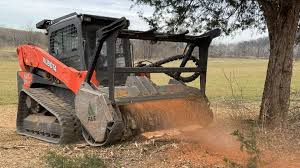
A forestry mulching machine—often a heavy-duty skid steer or a tracked vehicle—is equipped with a specialized attachment called a mulching head. This drum or disc rotates at high speeds and features sharp steel or carbide teeth.
As the machine moves through an area, the mulching head shreds everything in its path: small trees, dense brush, vines, and invasive undergrowth. The result is a clean, uniform layer of organic mulch left behind on the forest floor or backyard lawn.
What Can a Forestry Mulcher Handle?
While heavy-duty industrial mulchers can process trees up to 12 inches in diameter, standard residential forestry mulching is ideal for:
-
Saplings and small-to-medium trees (typically under 6–8 inches in diameter).
-
Thick brush, briars, and blackberry tangles.
-
Invasive plant species (like English ivy, kudzu, or buckthorn).
-
Leftover stumps and logging debris.
Part 3: The Powerful Benefits of Forestry Mulching
If you are looking to clear a large portion of a backyard or a wooded lot, forestry mulching offers distinct advantages over traditional “bulldozer-and-haul” methods.
1. Superior Eco-Friendliness and Soil Health
Traditional land clearing often involves scraping away the topsoil, leaving the earth vulnerable to erosion. Forestry mulching does the exact opposite. By leaving a thick layer of shredded wood on the ground, it creates a natural barrier that:
-
Prevents soil erosion from rain and wind.
-
Retains soil moisture.
-
Decomposes over time, reintroducing vital nutrients back into the earth.
2. Elimination of Heavy Debris and Burning
With standard land clearing, you are left with massive “slash piles” of brush and logs. Property owners must either pay thousands of dollars to haul this debris to a landfill or wait for a dry day to burn it—a process that introduces carbon emissions and wildfire risks. Forestry mulching completely eliminates the need for hauling or burning by recycling the material instantly.
3. Protection for “Keeper” Trees
Bulldozers are blunt instruments; their tracks and blades easily damage the delicate root systems of the trees you want to save. Forestry mulchers have a highly localized footprint. An experienced operator can navigate carefully around mature oaks, maples, or pines, clearing the suffocating underbrush while leaving the primary root systems completely unharmed.
4. Cost and Time Efficiency
Because forestry mulching combines cutting, grinding, and debris disposal into a single step with one machine, it reduces labor costs and project timelines significantly. What might take a crew with chainsaws and a small wood chipper a week to clear can often be completed by a forestry mulcher in a single afternoon.
Part 4: Comparing the Methods – Which Do You Need?
To help you decide the best approach for your upcoming property project, let’s look at how these two services compare across various scenarios.
| Feature | Backyard Tree Removal | Forestry Mulching |
| Primary Focus | Large, individual, or hazardous trees. | Dense undergrowth, brush, and small trees. |
| Equipment Used | Chainsaws, rigging ropes, cranes, stump grinders. | Tracked loaders with high-flow mulching heads. |
| End Product | Logs, firewood, wood chips, or an empty stump hole. | A uniform layer of nourishing ground mulch. |
| Best For | Proximity to structures, dead tree safety, specific clearing. | Reclaiming overgrown acres, trail creation, fence lines. |
| Impact on Ground | Localized; minimal footprint unless cranes are required. | Low ground pressure tracks; leaves protective mulch layer. |
When to Choose Tree Removal
You should opt for traditional tree removal if you have a massive, mature tree hanging over your roof, dead trees that are structurally unstable, or if you need a tree completely removed from the root system to build a structure or a paved driveway.
When to Choose Forestry Mulching
You should opt for forestry mulching if you have a chaotic thicket behind your lawn, want to clear a path through a wooded lot, need to establish a firebreak, or want to wipe out invasive brush that is choking out your backyard.
Part 5: The Hybrid Approach – The Ultimate Property Transformation
For many homeowners, the perfect backyard transformation isn’t an “either/or” choice. Instead, it involves a strategic hybrid approach that utilizes both services.
Imagine a heavily wooded backyard that has grown wild over the last decade. It contains a few beautiful, historic oak trees, several dead pines threatening the back fence, and an impenetrable wall of wild brush and saplings.
Here is how a professional crew executes a complete transformation using both methods:
-
Phase 1: Hazard Removal: Technicians safely climb and dismantle the dead pines near the fence line using traditional tree removal techniques.
-
Phase 2: Fine Specimen Selection: The homeowner and arborist identify the healthy mature oaks to keep, marking them clearly.
-
Phase 3: The Mulching Sweep: The forestry mulcher moves in, swiftly grinding down the wall of wild brush, briars, and low-quality saplings right up to the drip lines of the preserved oak trees.
-
The Result: In just a matter of days, the dangerous trees are gone, the beautiful canopy trees are highlighted, and the chaotic undergrowth is transformed into a clean, walkable, park-like mulch floor.
Part 6: Preparing for Your Project and Hiring Professionals
Both tree removal and forestry mulching involve high-powered machinery and inherent risks. To ensure your project goes smoothly, keep the following steps in mind:
Clear the Property Line and Utilities
Before any work begins, clearly mark your property lines so operators do not accidentally cross onto a neighbor’s land. Additionally, call your local utility digging hotline (such as 811 in the United States) to ensure there are no shallow underground power, gas, or water lines where machinery will operate.
Check Local Regulations and Permits
Some municipalities have strict tree preservation ordinances. You may need a permit to remove trees over a certain diameter, even if they are in your backyard. Professional tree services are usually familiar with local codes and can help navigate the permitting process.
What to Look for in a Contractor
When hiring a company for tree removal or forestry mulching, do not just look for the lowest bid. Ensure they possess:
-
Comprehensive Insurance: This protects you from liability if a tree lands on your home or an operator is injured on your property.
-
Up-to-Date Equipment: Well-maintained mulching heads and sharp teeth result in a finer mulch finish and a faster job.
-
Positive Reviews and Portfolios: Ask for before-and-after photos of previous residential clearing projects to gauge the quality of their work.
Conclusion: Reclaim Your Backyard
Your property is an investment, and your backyard should be a space of utility, safety, and beauty. You don’t have to live with hazardous dead trees or an unusable wall of dense weeds and thickets.
By utilizing targeted backyard tree removal for safety and forestry mulching for efficient land clearing, you can unlock your property’s true potential. Not only will you increase your usable square footage and property value, but you will also do so in a way that respects and nourishes the local environment. Turn that overgrown thicket into a beautiful, park-like oasis today!
